May in Amboseli sits at the far end of the long-rains period, when conditions have passed their wet-season peak but the park has not yet transitioned into the dry season that June initiates. Average temperatures are around 17 to 28 degrees Celsius. Rainfall, while lower than April’s peak, remains present and unpredictable.
The month is often described as easier than April — and that is accurate. But it is important not to overstate the improvement. May is still a green-season month with genuine operational demands. Understanding what it actually offers, rather than positioning it as a safe alternative to the rains, is the most honest way to plan.
Weather in May
May benefits from the gradual easing of the long-rains pattern. Rainfall is lower in May than in April — the wettest month — and the park begins to show early signs of drying by the end of the month. However, significant rain remains possible throughout May, and conditions can still be heavy, particularly in the first half.
The positive side of May’s weather is the landscape it produces: Amboseli is intensely green, the swamp systems are full, and the visual character of the park is rich in a way that the dust-and-stubble dry season does not match. For travellers who specifically want this green, atmospheric version of the park, May can be an authentic and photogenic choice.
Wildlife in May
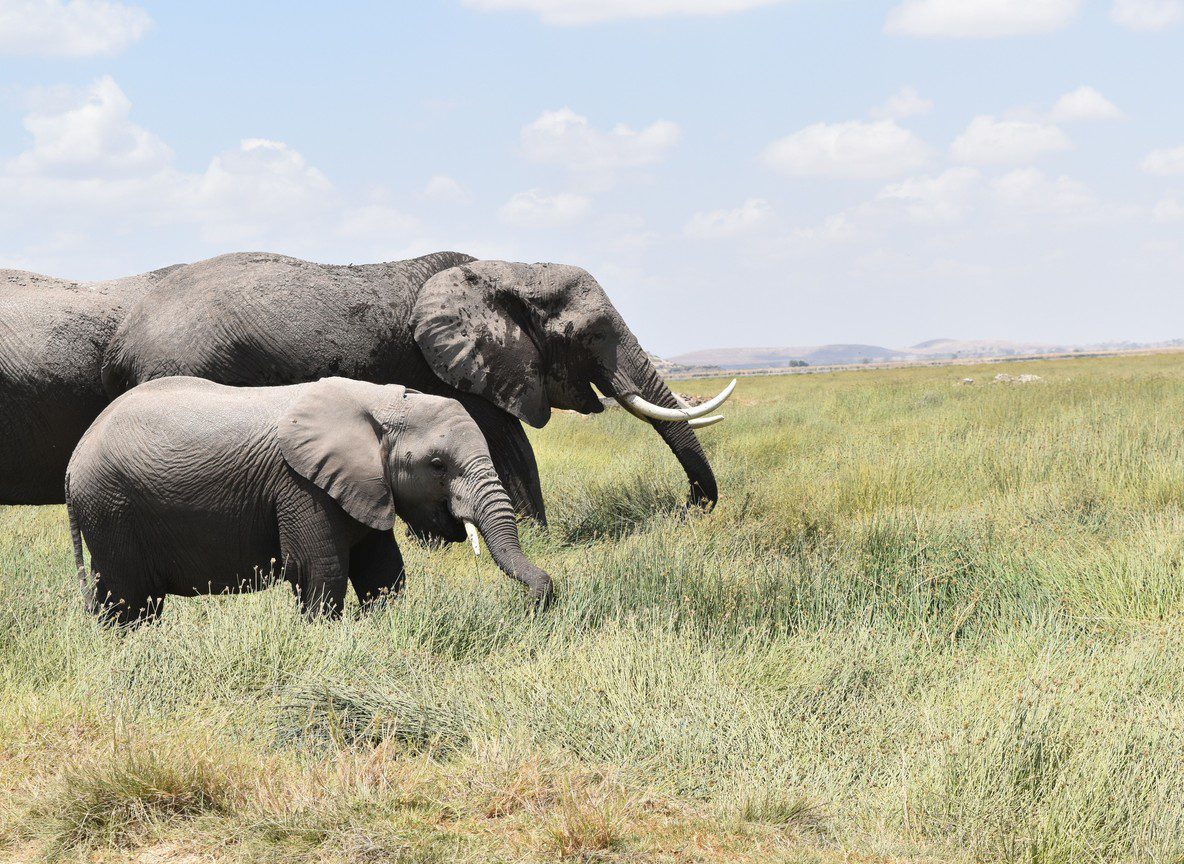
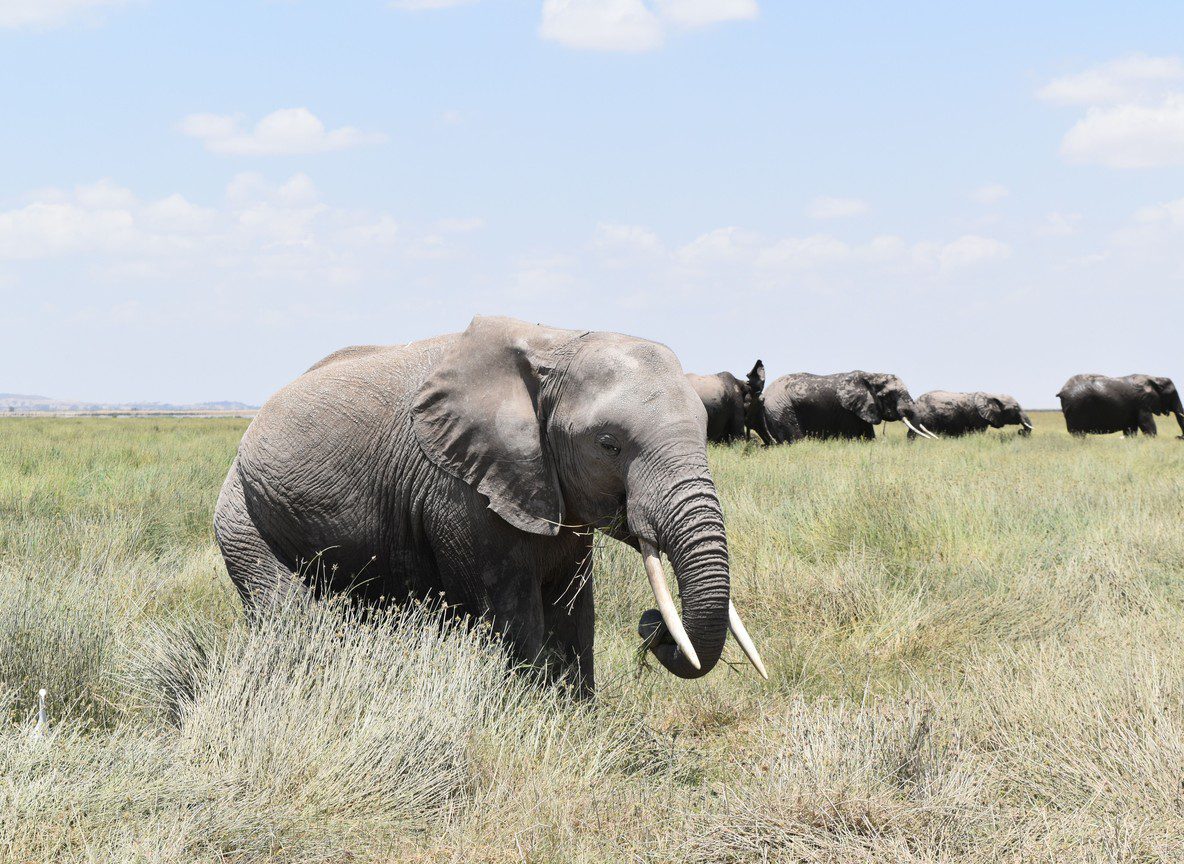
Wildlife quality in May is reasonable, with the same baseline strength that sustains Amboseli through every season: the permanent swamp systems ensure that elephant herds remain reliably present regardless of rainfall patterns. Large breeding herds gather at the swamps consistently throughout May.
What changes compared to dry season:
- Vegetation is at its densest, which reduces predator visibility significantly
- Game drives can feel slower when tracks are soft after rain
- Wildlife disperses more broadly across the ecosystem in wet conditions, rather than concentrating around water as it does in dry months
- The visual clarity of game drives is softer — longer grass, more obstacles — than in the open dry-season landscape
Birding in May is excellent. The full wet-season bird community is present, Palearctic migrants that arrived in November are still in the system, and the expanded wetlands host a richer waterbird community than any dry-season month.
Kilimanjaro Views in May
May is a weak month for Kilimanjaro visibility. Cloud cover remains significant, mornings are frequently overcast, and clear summit reveals are occasional rather than regular. Mountain photography in May should be treated as a bonus if it happens rather than a planning assumption.
If Kilimanjaro views are the primary objective, May is not the right month. Waiting for June — or travelling in January or February — produces dramatically better odds.
May vs April: Is May Better?
For most travellers, yes. May is generally easier to manage than April:
- Rainfall tends to be lower in May
- The park begins showing early signs of drying
- Road conditions are marginally more manageable on average
- The psychological weight of “peak long rains” has passed
That said, the improvement is relative. May is still a wet, green, variable month. It is better than April in much the same way that February is better than January — a real difference, but within the same seasonal category.
The key rule: May is easier than April, but it is not June. Travellers who are hoping for June conditions in May will be disappointed.
Who May Suits
Good fit for:
- Budget travellers who want the park at its lowest rates and are genuinely comfortable with the conditions
- Birders — May is one of the strongest months for species count and wetland bird activity
- Green-season photographers who want dramatic skies, lush landscapes, and a park that looks completely different from the dust-bowl dry season
- Repeat safari visitors who have done Amboseli in peak conditions and want a different experience
Poor fit for:
- First-time safari visitors who want reliable, efficient game drives
- Travellers whose primary interest is Kilimanjaro photography
- Short trips of one to two nights, where weather variability on a single drive can undermine the whole visit
- Families with young children who may struggle with slow, wet drives
Value in May
May offers some of the lowest rates in the Amboseli year. Camp occupancy is at its annual minimum, and lodges and operators typically offer shoulder-season pricing throughout the month. For travellers whose dates are fixed in May and who are comfortable with the seasonal trade-offs, the value case is real.
The important caveat applies as always: rates are lower because May is a harder month operationally. Value is only meaningful if the conditions match what you actually came for.
How Many Nights in May
Three nights is the better structure for May. The additional drives provide more margin to absorb a weather-affected session, and three mornings significantly improve the odds of catching a clear Kilimanjaro dawn if one occurs.
Two nights can work for travellers who approach May pragmatically and accept that conditions will be whatever the month gives them.
May at a Glance
| Factor | May Conditions |
|---|---|
| Rainfall | Moderate — easing from April peak |
| Wildlife visibility | Moderate — elephants reliable, predators harder |
| Kilimanjaro views | Weak to occasional |
| Road conditions | Variable — better than April, still can be soft |
| Crowd levels | Very low |
| Best for | Birders, green-season photographers, budget travellers |
| Value | Best of the year in terms of rates |
For comparison, see the Amboseli in April guide and the Amboseli in June guide on Touring Insights.
If this guide has you ready to travel, a safari specialist can handle the route, camps, and logistics end to end.
Want to Book a Tour With Us?